
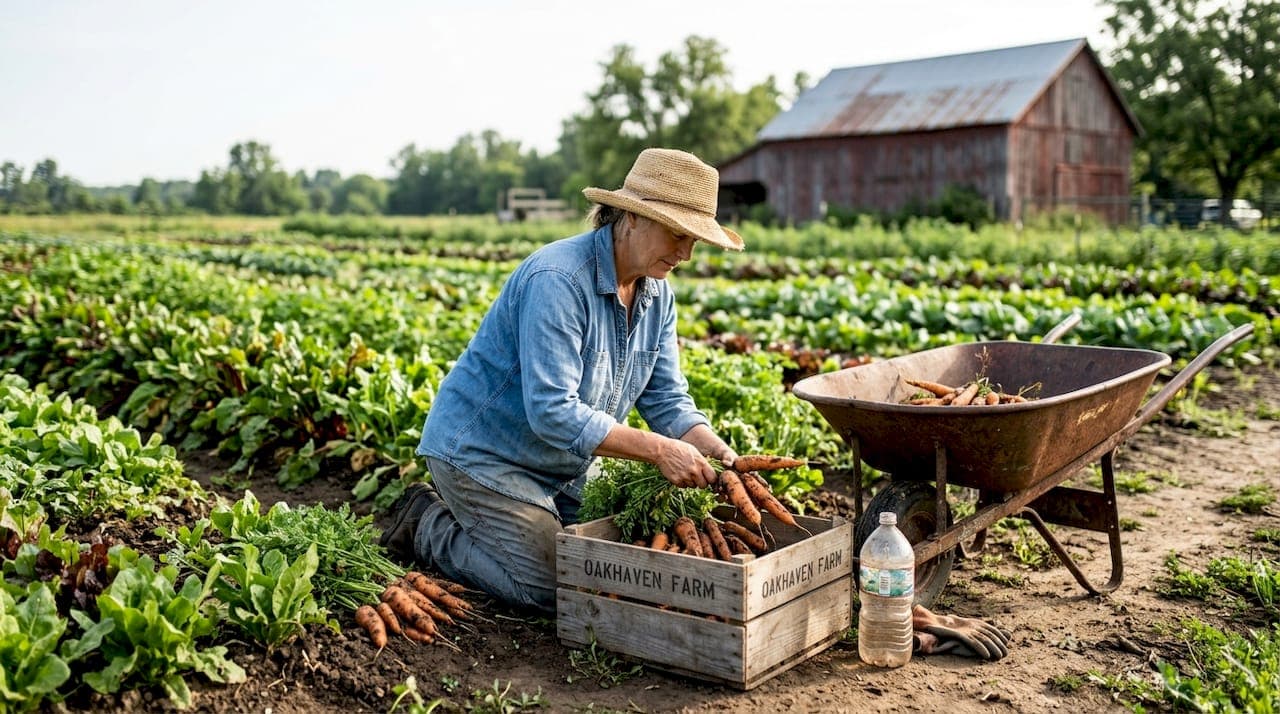
Small farms produce about one-third of food consumed in wealthy nations, yet their contributions remain largely invisible in mainstream food conversations. These operations punch far above their weight in sustaining local economies, preserving biodiversity, and offering consumers direct connections to their food sources. You'll discover how small farms shape sustainable food systems globally, the ecological advantages they provide through agroecological practices, and practical ways you can support these vital producers through your purchasing decisions. Understanding their role empowers you to make choices that strengthen resilient, transparent food networks in your community.
Table of Contents
- Key takeaways
- The significant role of small farms in global and local food production
- Sustainability and biodiversity benefits of small farms
- Small farms and short food supply chains: building local resilience
- Challenges and the future outlook for small farms
- Support small farms with Savori Market
- Frequently asked questions
Key Takeaways
| Point | Details |
|---|---|
| Global share of food | Small farms provide about thirty percent of the world’s food supply, highlighting their crucial role in global and local food systems. |
| Biodiversity and soil health | Agroecological methods protect biodiversity, maintain soil health, and rely less on synthetic inputs. |
| Direct to consumer | Online farmer markets and direct purchases help consumers access diverse products while supporting small producers. |
| Fair pricing for agroecology | Platforms like Savori Market show how paying fair prices can reward sustainable agroecological practices. |
The significant role of small farms in global and local food production
Small farms operate on parcels under 20 hectares yet deliver roughly one-third of food consumed in high-income countries. This contribution gets systematically underestimated because trade flows and aggregated data mask their actual output. When researchers account for local consumption patterns rather than just export figures, small farms emerge as critical food providers across diverse economies.
Globally, smallholder farms produce 30% of the world's food supply. In lower and middle-income nations, these operations occupy 30 to 40 percent of agricultural land while supporting millions of rural livelihoods. Their importance extends beyond mere production numbers. They preserve heirloom crop varieties, maintain soil health through diverse planting, and serve as biodiversity reservoirs that industrial monocultures cannot replicate.
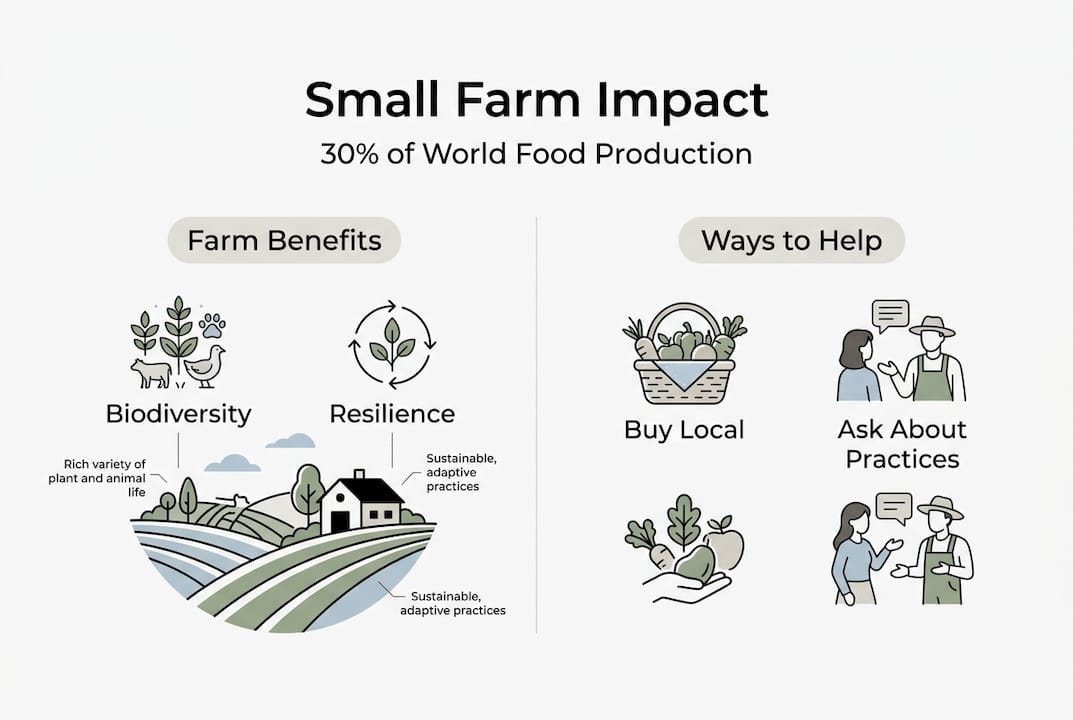
The online farmers market model reflects this reality by connecting consumers directly with small producers. These platforms reveal the breadth of what small farms offer: seasonal vegetables, pasture-raised proteins, artisan dairy, and heritage grains that supermarket supply chains often exclude.
Small farm contributions by economy type
| Economy Level | Food Production Share | Agricultural Land Share | Key Characteristics |
|---|---|---|---|
| High-income nations | ~33% | 15-25% | Underestimated due to trade data; strong in local/regional markets |
| Middle-income countries | ~30% | 30-35% | Balance subsistence and market production; vital for rural employment |
| Low-income nations | ~30% | 35-40% | Dominant in food security; limited mechanization; high biodiversity |
Key facts about small farm food systems
- Small farms maintain genetic diversity by growing multiple crop varieties instead of single commodity crops
- They create employment opportunities at rates three to five times higher per hectare than large industrial operations
- Local food networks built around small farms reduce transportation emissions and preserve freshness
- These operations adapt quickly to climate variations through crop rotation and intercropping strategies
- Small farms often integrate livestock and crops, creating closed-loop nutrient cycles that minimize external inputs
Sustainability and biodiversity benefits of small farms
Agroecological approaches transform small farm economics and environmental impact simultaneously. India's Zero Budget Natural Farming program demonstrates this potential. Participating small farms doubled their profits while maintaining yields and significantly improving bird biodiversity on their land. These results challenge the false choice between productivity and environmental stewardship.
The program eliminated synthetic fertilizer and pesticide costs through composting, natural pest management, and soil microbiology enhancement. Farmers reported healthier soils, reduced water needs, and stronger pest resistance in crops. Bird populations responded positively to diverse plantings and reduced chemical exposure, indicating broader ecosystem recovery.
However, agroecological transitions face real obstacles. Kenyan smallholder organic farms experience yield gaps due to nutrient limitations, pest pressure, and rainfall variability. These challenges highlight the need for technical support, knowledge sharing networks, and patient capital that allows farmers to build soil fertility over multiple seasons. Success requires more than good intentions; it demands practical resources and expertise.
Platforms like Savori Market help bridge this gap by creating markets that reward sustainable practices. When consumers pay fair prices for agroecologically grown food, farmers gain financial stability to invest in long-term soil health and biodiversity enhancement.
Sustainable practices and agroecological benefits
- Crop diversification spreads risk and creates habitat complexity for beneficial insects and pollinators
- Cover cropping between main seasons prevents erosion, suppresses weeds, and adds organic matter to soil
- Integrated pest management reduces chemical inputs by 60 to 80 percent while maintaining crop protection
- Composting and green manures replace synthetic fertilizers, cutting costs and improving soil structure
- Agroforestry systems on small farms sequester carbon while producing fruits, nuts, and timber alongside annual crops
Pro Tip: When shopping for produce, ask vendors about their pest management and soil building practices. Farmers using compost, cover crops, and natural predators for pest control deliver products that support both your health and ecosystem resilience.
Small farms and short food supply chains: building local resilience
Short food supply chains eliminate intermediaries between farmers and consumers, fundamentally reshaping value distribution. Traditional supply chains capture 70 to 85 percent of the retail food dollar in handling, processing, and distribution. Direct sales through farmers' markets, CSA programs, and online platforms return 80 to 95 percent of revenue to producers. This difference determines whether small farms thrive or merely survive.
Consumers recognize this value exchange. Research shows shoppers willingly pay premiums of approximately 34.5% for local food from known sources. This premium reflects more than price tolerance; it represents active investment in food system transparency, reduced environmental impact, and community economic health. People want relationships with their food sources, not anonymous global supply chains.
The environmental case strengthens the economic argument. Short supply chains dramatically reduce food miles, cold storage duration, and packaging requirements. A tomato from a farm 30 miles away reaching you within 24 hours carries a fraction of the carbon footprint of one shipped 2,000 miles and stored for weeks. Freshness and sustainability align naturally in local food networks.
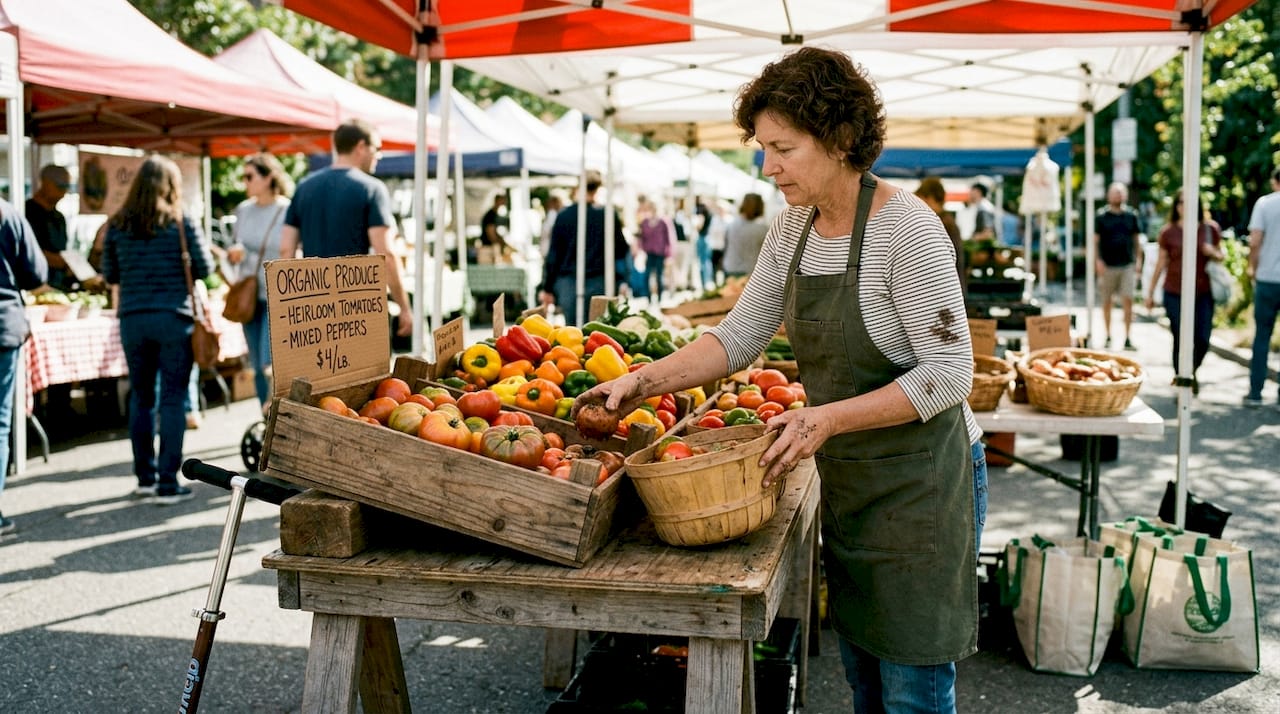
Yet gaps remain between values and behavior. While consumers express support for small farms, convenience and price still drive many purchasing decisions. Closing this gap requires making local food access as easy as conventional shopping, which online platforms increasingly achieve.
Direct sales channels comparison
| Channel | Consumer Benefits | Farmer Benefits | Key Challenges |
|---|---|---|---|
| Farmers' markets | Fresh products, personal interaction, community atmosphere | Direct pricing control, immediate payment, customer feedback | Weather dependent, limited hours, transportation logistics |
| CSA programs | Season-long variety, cost predictability, farm connection | Upfront capital, guaranteed sales, customer loyalty | Requires consumer flexibility, box contents vary, pickup logistics |
| Online platforms | Convenience, wide selection, year-round access | Broader customer reach, lower overhead than physical markets | Technology requirements, shipping considerations, platform fees |
Steps to support small farms through direct purchasing
- Research local CSA programs and sign up for seasonal shares that match your household's consumption patterns and preferences
- Visit farmers' markets regularly and build relationships with three to five vendors whose products and practices align with your values
- Explore online farmers market platforms that aggregate multiple small producers for convenient one-stop shopping
- Purchase whole or half animals directly from livestock farmers to maximize their revenue and minimize your per-pound protein costs
- Buy seasonal bulk quantities of preservable items like tomatoes, berries, and stone fruits for canning or freezing
- Gift CSA shares or local product subscriptions to friends and family, expanding the customer base for small producers
- Share your positive experiences on social media and recommend specific farms to neighbors and colleagues
Pro Tip: Before committing to a CSA, ask about the farm's growing practices, typical box contents, and flexibility for vacations or dietary restrictions. A good match between your needs and their offerings ensures satisfaction and continued support.
Challenges and the future outlook for small farms
Small farms face mounting economic pressure that threatens their traditional productivity advantages. In semi-arid regions of India, rising input costs and monocropping erode the efficiency gains small operations historically achieved through intensive labor and diverse cropping. When small farms adopt industrial methods without industrial scale, they lose their competitive edge without gaining the cost efficiencies of large operations.
Policy environments often favor large-scale agriculture through subsidies, research priorities, and infrastructure investments. Small farms operate in regulatory frameworks designed for industrial operations, facing disproportionate compliance costs and administrative burdens. Credit access remains challenging, with lenders viewing small farm operations as higher risk despite their proven resilience.
Yet small farms persist through adaptation. Direct-to-consumer sales, crop diversification, and agroecological methods create viable business models outside commodity markets. Farms that embrace multiple revenue streams, from agritourism to value-added products like jams and baked goods, build financial resilience that single-crop operations cannot match.
The future depends on consumer choices and policy reform. Every purchase from a small farm strengthens its viability and signals market demand for alternatives to industrial agriculture. When you choose local, seasonal, and directly sourced food, you vote with your wallet for a more diverse, sustainable, and transparent food system.
Platforms like Savori Market remove barriers for small producers to reach conscious consumers. If you're a farmer or artisan, becoming a vendor connects you with customers actively seeking what you offer. This mutual benefit strengthens local food economies one transaction at a time.
Challenges and strategies for small farm sustainability
- Rising costs for seeds, fuel, and equipment squeeze profit margins, requiring diversified income streams and direct sales to maintain viability
- Climate variability increases crop risk, making crop insurance, water management infrastructure, and adaptive varieties essential
- Labor shortages during peak seasons challenge small farms, driving interest in community work programs and mechanization appropriate to their scale
- Market access limitations restrict growth, making online platforms and cooperative marketing arrangements increasingly important
- Knowledge gaps in business management and marketing can be addressed through farmer networks, extension services, and peer learning groups
- Succession planning remains critical as farmer populations age, requiring new farmer training programs and land access initiatives
Support small farms with Savori Market
Every choice you make about food shapes the agricultural landscape. When you shop fresh local products through Savori Market, you directly support the small farms and artisans preserving sustainable food systems in your region. Our online farmers market brings the community connection of weekend markets to your screen, making it convenient to access seasonal produce, pasture-raised meats, artisan cheeses, and handcrafted goods from trusted sources.
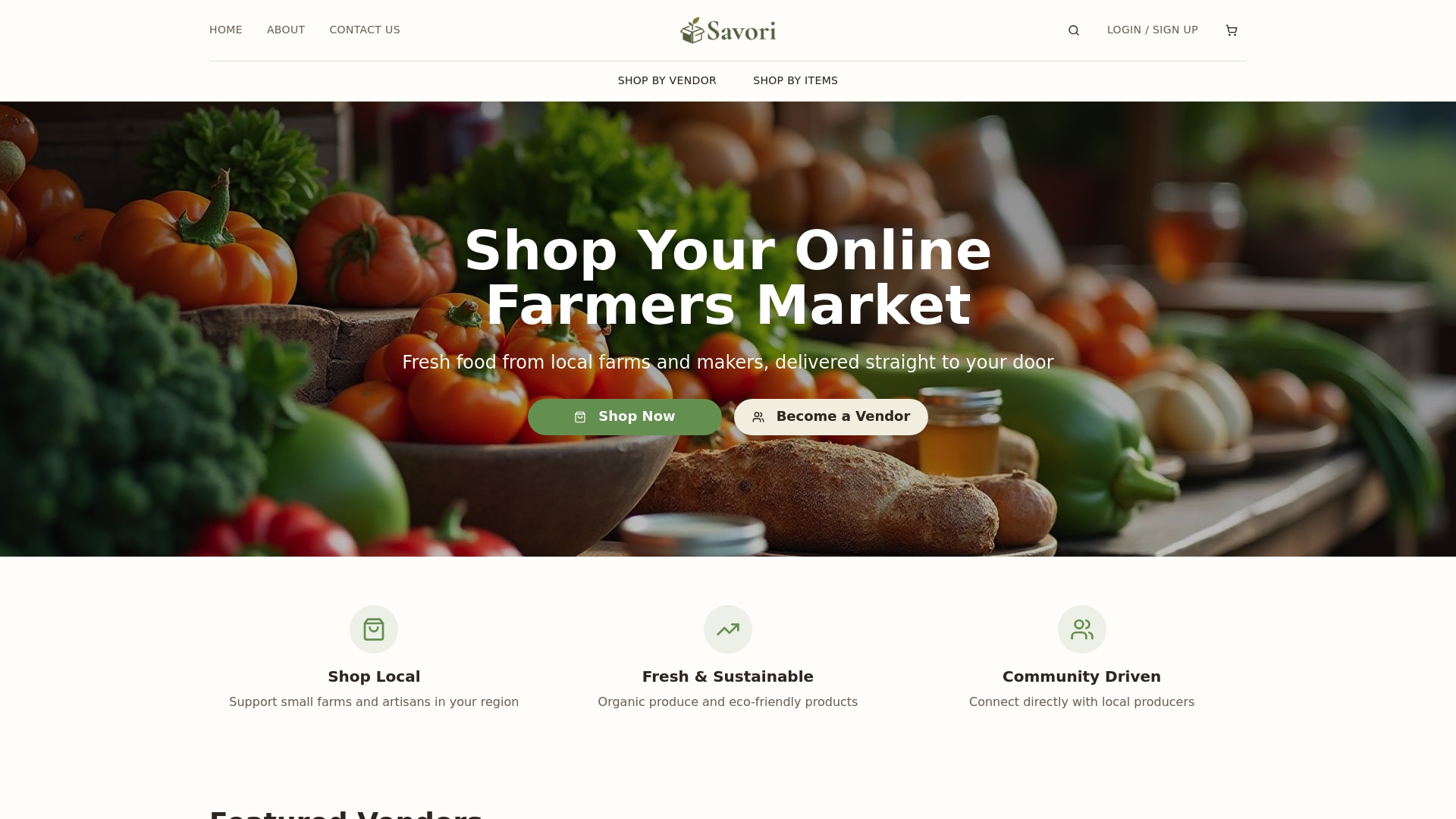
You'll discover transparency in every product listing, with farmer profiles and growing practices clearly explained. No intermediaries dilute the relationship between you and your food sources. Each purchase keeps more money in your local economy while reducing the environmental footprint of your meals. If you're a producer, becoming a vendor at Savori Market connects you with customers who value what you create and how you create it.
Pro Tip: Start by exploring seasonal offerings on Savori Market and building a core group of favorite vendors. Regular purchases from the same producers strengthen their business stability and deepen your understanding of seasonal eating patterns.
Frequently asked questions
What is the impact of small farms on food security?
Small farms contribute approximately 30% of food production globally and in high-income nations, making them significant players in local and regional food security. However, they face challenges scaling to address global hunger due to limited mechanization, capital constraints, and policy environments favoring industrial agriculture. Their greatest strength lies in providing diverse, nutrient-dense foods to local markets and maintaining agricultural biodiversity that industrial monocultures cannot replicate.
How can consumers support small farms effectively?
The most effective support comes through direct purchasing via farmers' markets, CSA programs, and online farmers market platforms that maximize revenue flowing to producers. Choosing diverse, seasonally appropriate products helps farms maintain the crop variety that makes them economically and ecologically resilient. Consistent purchasing throughout the growing season, rather than sporadic visits, provides the financial predictability small operations need for planning and investment.
What challenges do small farms face in modern agriculture?
Small farms confront rising input costs, competition from subsidized industrial operations, and regulatory frameworks designed for large-scale production. Access to capital, land, and labor presents ongoing obstacles, particularly as farmer populations age and new entrants face high land prices. Climate variability increases production risk without the financial buffers large operations maintain. Many small farms survive by diversifying income through direct sales, agritourism, and value-added products rather than competing in commodity markets.
Why do small farms excel at biodiversity conservation?
Small farms typically grow multiple crop varieties and integrate livestock, creating habitat complexity that supports beneficial insects, pollinators, and bird populations. Their scale allows intensive management of diverse plantings that would be impractical on thousands of acres. Agroecological practices common on small farms, including crop rotation, cover cropping, and hedgerow maintenance, provide food and shelter for wildlife throughout the year. This biodiversity enhances natural pest control and pollination services while preserving genetic diversity in crop varieties.
What makes short food supply chains more sustainable?
Short supply chains reduce transportation distances, cold storage duration, and packaging requirements, cutting the carbon footprint of food by 40 to 60 percent compared to conventional distribution. Eliminating intermediaries means less handling, processing, and waste at each stage. Products reach consumers at peak freshness, reducing spoilage and nutrient loss. The economic sustainability strengthens environmental benefits, as farmers earning fair prices can invest in soil health, biodiversity, and long-term ecological stewardship rather than maximizing short-term yields.